
Aged Care in Rural Areas
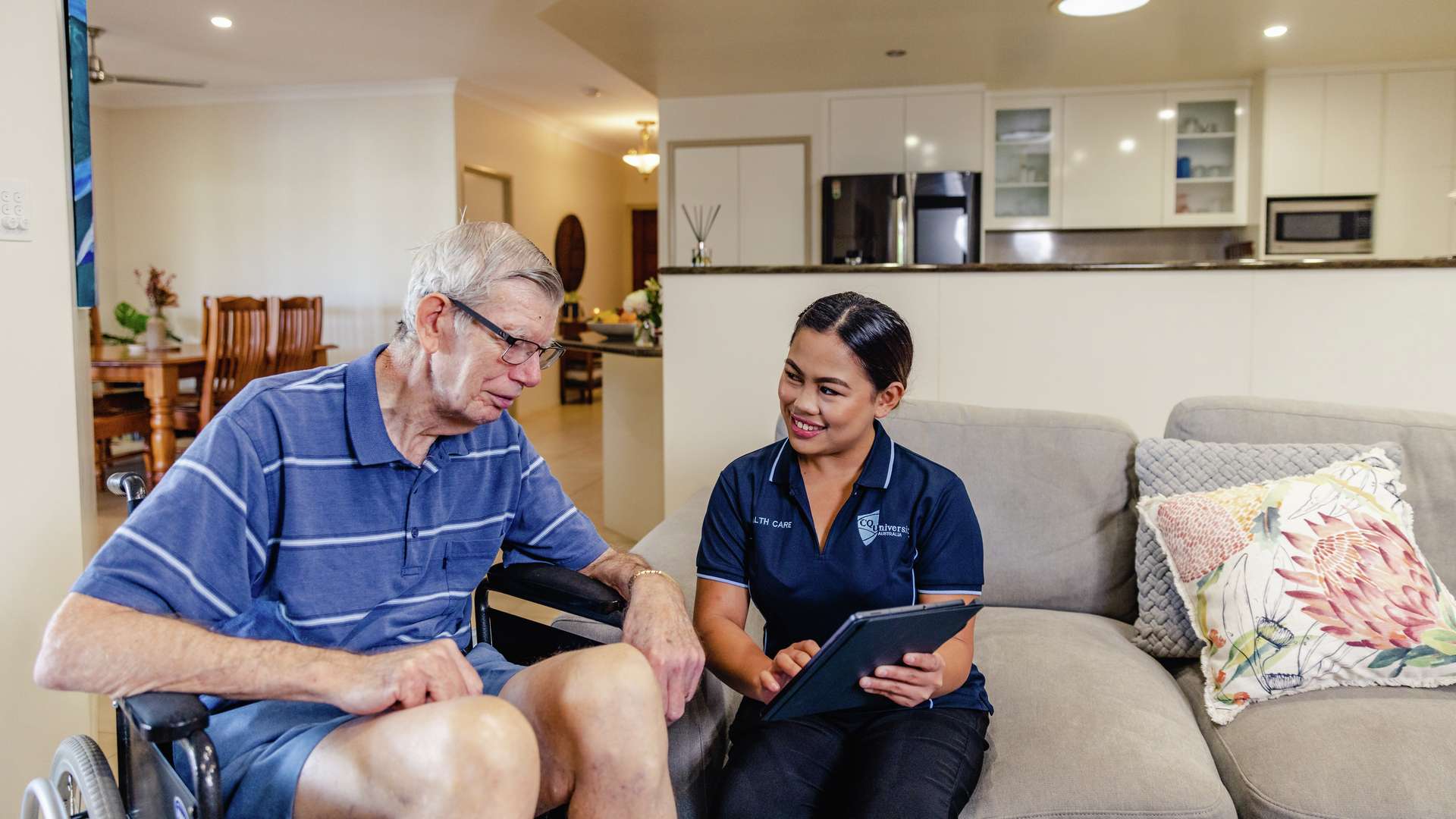

Time for "new" thinking about aged care in rural areas.
Critical gaps exist in effective services. They must support home-based care that meets rural and remote older adults' needs.
Access, resource limitations, and workforce constraints challenge effective care.
Designing services with communities ensures older adults receive care that fits their context. Program co-design supports local innovation and sustainability.
A strengths-based approach involves working with local communities and healthcare providers. It supports the idea that "those who own the program will grow the program."
Who Are We?
The Aged Care in Rural Areas (ACRA) research team came together in 2021.
We have an interest in improving care for older people in rural areas. We were asked to contribute to a review (Storuman Cares) of aged care services in the Storuman Municipality in northern Sweden:
- Literature review on the types and scope of aged care services which can be sustained in rural and remote areas (Vaughan et al., 2022),
- A review of approaches to community-led innovation in rural health and care services (Carson et al., 2022),
- A critical assessment of the process of conducting and acting on the Storuman Cares review (Jonsson, 2023).
The team has also started to develop an evaluation framework. It uses data from home care providers. The framework assesses the value of service innovations to improve client outcomes and cut service costs.
We have showcased our work to academics and practitioners in rural and regional Queensland and New South Wales through links with CQU’s Health Workforce Academy and the Manna Institute. This has led to the enthusiasm of stakeholders in the Central Highlands region (Queensland) to support our internal research grant.
We are also engaged in an international grant, The CREATE Project. With partners in Canada and the USA we are exploring: How can those who undertake research, across various disciplines and settings, become more connected and accountable to those they are obligated to serve? How can we pursue the goal of health equity through the formation of research practices and networks where social accountability is a core value?
Our Projects
We are conducting research on home-based care for older adults in rural and remote Queensland. We want to understand the current issues. We also want to understand the opportunities for innovation in aged care. This includes home and community care in the Central Highlands.
SAR-CREATE at CQUniversity, Australia
Our team is proud to be part of the Community-engaged Research in Education, Advocacy, & System Transformation for Equity (CREATE): Exploring the Transformative Potential of Socially Accountable Research Networks Locally and Globally project, led by the Northern Ontario School of Medicine with sites in Canada and the USA. Our site’s overall aim is to explore how Socially Accountable Research (SAR) can inform and facilitate the design of sustainable, community-responsive services for older adults. Our research is underpinned by a social justice perspective and utilises a Community-Based Participatory Research (CBPR) and co-design approach. It incorporates embedded case studies of community-based research projects with older people Central Highlands region of Queensland.
Research methods include:
- Co-design workshops
- Focus groups
- Interviews
- Reflective logs
Data analysis will involve:
- Inductive coding
- Deductive coding using the Social Accountability framework and the Double Partnerships Pentagram
- Within-case and cross-case analysis
Key Partners and Stakeholders:
- Community groups: CTM Links Capella and Gemfields Community Support
- NGO: CatholicCare Central Queensland
- Local Government: Central Highlands Regional Council
See: The CREATE Project
Animals in Australian Residential Aged Care Facilities: Provision, Policy, and Practice. In her PhD research, ACRA researcher Dr Wendy Newton found that there were few guidelines for including animals in Australian Residential Aged Care Facilities (RACFs), which, with the changes in the New Aged Care Bill 2024, could be problematic for RACFs that are now obligated to provide residents who want animal contact with access to pets or other animals. Some of her research also suggested there could be differences between how metropolitan and regional/rural areas include animals (an area she would like to explore further). Ultimately, she found that there is a need to explore ways to include animals in RACFs that are sustainable by being safe and fun for people and animals. In addition to her thesis, she produced five co-authored papers with her supervisors, Professors Jenni Judd and Tania Signal. Dr Newton hopes to undertake further research exploring the human-animal bond and its relationship to health and wellness.
With spring 2024 almost upon us we thought should update our progress.
Robyn was in Queensland’s Central Highlands completing face to face interviews with health and social services stakeholders in June. Wendy completed some additional interviews online in August. The ACRA team have now completed the initial coding of these interviews, and we are excited to share some preliminary findings.
What We Are Learning
- Community Commitment: The Central Highlands is a caring community with a strong commitment to ensuring older people can age comfortably and with dignity.
- Regional Challenges: Models developed in metropolitan areas are often not suitable for other settings. For example, funding and time allocation for home visits do not account for the distances between clients, and pharmacists lack the economy of scale to absorb costs for webster packs.
- Community Initiatives: There are community-driven initiatives in the Central Highlands that need support and resources. These models can serve as examples for other communities.
- System Navigation: People want to learn how to navigate the aged care system to support themselves, their clients, families, and friends.
- Local Workforce: The presence of educational institutions and health care providers can contribute to growing a local workforce for home-based aged care.
- Collaboration: There is good local collaboration across health and community sectors, with a desire to strengthen these networks.
- Choice of Care: Even small rural areas need to offer a choice of care and providers.
- Unique Communities: Each small community has unique strengths and issues, which are often overlooked in metro-centric models.
Key Issues Identified
- Transport: around Emerald, from smaller communities into Emerald, and to larger centres such as Rockhampton
- Navigating the System: understanding the aged care system and getting the right information in a useful format
- Workforce: Who wants to work in home based aged care? Who will stay working in home based aged care? What are some useful workforce planning techniques? This is something our team could potentially help with!
- Social Support: engagement with the community (‘getting out of the house’) is important and can be linked with ‘getting the right information’.
- Accommodation: the absence of a retirement village to facilitate the transition from home to residential aged care is a significant gap.
- Telehealth: Phone and internet service models are problematic but necessary. Community organisations and pharmacies can help facilitate contact and telehealth.
- Sustainable Funding: There is need for sustainable funding for community-based groups, events, information dissemination, and social support for older people.
The Next Steps
Robyn and Wendy plan to return to the Central Highlands in October 2024 for action-oriented discussions with residents who are aged over 55 to develop ‘one achievable thing’ for the community. These focus groups/workshops are in the planning stage now and we will keep you posted on our October visit.
Want More Information?
Please email ACRA@cqu.edu.au We are excited to have an opportunity to work with you.
Focus groups identify how Central Highland communities can be better places to age.
A total of 26 Central Highlands residents aged over 55 participated in four workshops held in Capella, Emerald and Sapphire from 22 to 24 October 2024.
Participants were asked to identify what would make their community a better place to age.
The main themes from the focus groups were:
Transport
- Community Bus: Proposals for a community bus to help with transport to social activities and essential services.
- Volunteer Network: Volunteers to assist with transport, errands, and household chores, especially for short-term needs.
- Minibus for Events: A minibus to facilitate transport to community events and between towns.
Information
- Noticeboards: Erecting noticeboards in accessible locations to provide information about available services and activities.
- Directory of Activities: Creating a directory or newsletter listing activities and services for seniors.
- Navigating Health Services: Providing better information on how to navigate the health system, including a potential service roadmap.
Connection
- Social Activities: Organising more social activities to help people connect, such as dances, choirs, and community meetings.
- Support Networks: Establishing networks to support people returning from hospital or those with short-term needs.
- Skills Register: Creating a register of people with skills who can offer advice or assistance with various tasks.
Community Collaboration
- Service Coordination: Encouraging better coordination and communication between different service providers.
- Volunteer Services: Formalising volunteer services to assist with navigating hospital services and providing support in emergencies.
Housing and Accommodation
- Age-friendly Housing: Developing age-friendly accommodation that allows residents to transition from independent living to higher levels of care as needed.
- Seniors’ Units: Proposals for more seniors’ units in specific areas to meet the growing demand.
Education and Awareness
- Curriculum Additions: Suggestions to include information on navigating the health system and being respectful to older adults in the school, TAFE and University curriculum.
- Public Awareness: Raising awareness about the needs of older adults and differently-abled individuals in the community.
Clinical Issues
- Healthcare Services: Addressing gaps in healthcare services, such as palliative care, mental health support, and rehabilitation services.
- Workforce Challenges: Improving workforce competence in critical areas and addressing the mismatch between workforce availability and funding.
- Long-term Relationships with GPs: Emphasising the importance of long-term relationships with general practitioners for continuity of care.
Next Steps
- While some of the issues and solutions identified are long term, there are many ideas that could be implemented. Participants identified several priority actions that they thought were achievable.
- ACRA will find out if similar/relevant actions have been undertaken, which can help guide any community/service actions.
- ACRA can help communities and services develop a survey about services and volunteer opportunities.
- At a later visit or Zoom we will workshop developing these ideas and getting funding with communities and services
- We are also working on a systematic review (synthesis of literature and evidence) and will develop some research snap shots (similar to Storuman Cares 2050 – Rural Data (rural-data.com) to aid in advocacy, education, and grant applications.
What We've Done
- April 2022: Held a seminar for key service providers to gauge interest in collaborating on home-based aged care services.
- Since May 2024: Interviewed 13 service providers and key stakeholders from Emerald and the Gemfields.
- Attended community meetings and spent time in the Central Highlands region to understand the workings of home-based aged care.
- 22 to 24 October 2024: A total of 26 Central Highlands residents aged over 55 participated in four workshops held in Capella, Emerald and Sapphire. Participants were asked to explore what would make their community a better place to age.
- Undertaken an initial analysis of the interviews and focus groups.
What We Are Learning
Key Issues in Home-Based Care for Older Adults in Rural and Remote Queensland
Systemic and Structural Challenges
- Navigation Barriers: Difficulties in system navigation for both older adults and clinicians, complex processes for asset disclosure.
- Inconsistent and Delayed Assessments: Discrepancies between phone assessments and reality, long delays in care package approvals.
- Communication Barriers: Issues due to hearing deficits, reluctance to answer private numbers, and lack of digital correspondence
Workforce and Service Delivery Gaps
- Staffing Shortages: Recruitment challenges, especially in rural areas, and difficulty in replacing staff. Impact of NDIS on workforce availability.
- Unfunded and Informal Care: Reliance on informal carers with minimal training, unpaid work by community members.
- Financial Barriers: High cost of living in rural areas, insufficient financial incentives for staff recruitment.
Inequitable and Ineffective Service Models
- Centralised or Metropolitian based services: Outside providers often lack an understanding of the unique contextual challenges faced in rural areas, such as distance and workforce issues. They also fail to recognize local initiatives and strengths.
- Mismatch Between Services and Needs: Services not aligning with older adults' needs, long wait times, and transportation challenges.
- Cross-Subsidisation and Self-Sustaining Models: Need for self-sustaining service delivery models, lack of integration among service providers.
Social and Health-Related Issues
- Social Isolation: Lack of social support, need for creative solutions like engaging high school students.
- Health Access Barriers: Limited access to healthcare professionals, avoidance of services until critical.
- Malnutrition and Obesity: Diet changes linked to acute illnesses, refusal of dietary supplements.
Key Opportunities and Innovations
Self-Advocacy and Local Initiatives
- Seniors Groups as Social Hubs: Acting as advocates, organisers, and initiators.
- Community-Driven Success Stories: Initiatives like Positive Ageing, Capella Seniors, and Silver Circle.
Innovative Models of Care
- Workforce Innovation: Examples from the local organisations.
- Engagement with the Community: Importance of social support and getting the right information.
Potential Stakeholders and Partners
Local Government and Community Development
- Role of Local Councils: In community development and aged care.
- Local Investment: Potential for investment in GP services and residential aged care.
Community-Initiated Advocacy
- Case Studies: Highlighting issues and solutions in different small centres.
What We Will Do
- A strong message from you was that people wanted ACTION, not just talk!
- From the interviews, focus groups and available information we will map available home-based aged care services across the Central Highlands.
- At a later visit or Zoom we will workshop developing ‘one achievable thing’ and getting funding (February 2025).
- We are also working on a systematic review (synthesis of literature and evidence) and will develop some research snap shots (similar to: Storuman Cares 2050 – Rural Data (rural-data.com) to aid in advocacy, education, and grant applications.
To Learn More and To Give Feedback
Contacts:
- Robyn Preston, Senior Lecturer, Public Health: (07 4726 5395)
- Wendy Newton, Research Assistant: (07 4150 7066)
- Email: ACRA@cqu.edu.au
Storuman Cares 2050
Storumans Kommun in northern Sweden is a challenging environment in which to provide elder care. More than 15% of the population is aged 70 years or older. Over 40% live in small villages that can be very distant from health and care services. Overall health for older people is improving, but health needs are increasingly complex. This includes increased cases of dementia and other mental illnesses, chronic illness and multiple co-morbidities that mean a demand for care services even when people are able to mostly live independently. The Kommun provides both in-home care and public housing, but always finds it difficult to recruit and retain care workers. Current models of care are very expensive, and there is a need to find new models.
Outputs
In addition to a final options paper, the project produces regular briefing notes for the Kommun and its residents.
For more information contact storumancares@storuman.se.
Past Events
Public Seminar: Forget about it! Time for ‘new’ thinking about aged care in rural areas
22 April 2024.
CQUniversity Emerald Campus
Presented by:
- CQUniversity Emerald,
- Aged Care in Rural Areas (ACRA) Consortium
- Umeå University Department of Epidemiology and Global Health.
Professor Dean Carson, from Umeå University, shared his experience. He worked with rural Swedish municipalities to develop new aged care models. He outlined how challenges in rural Queensland were similar to those in remote Sweden.
Presentations (PowerPoint Pdf):
- ACRA Introduction: Presentation Robyn Preston
- Forget About it: Presentation by Dean Carson
Media article: Don't forget about aged care - Central Queensland Today
Our Research Team
Dr Robyn Preston (CQUniversity) is a social scientist and public health researcher. She has an interest in health and community workforce issues in remote and rural communities and developing innovative models of care through health and community partnerships.
Dr Geraldine Vaughan brings her women's and public health backgrounds to the Storuman team, with an interest in how ageing services can be improved in remote and regional areas with a focus on women's needs.
Dr Ashlyn Sahay is Senior Lecturer, Nursing and Midwifery and has an interest in developing the health workforce and service delivery models particularly in the rural and regional areas.
Dean is a human geographer with an interest in who lives in, who works in, and who visits small rural areas. He is the project leader for the Storuman Cares initiative in Sweden that is looking at innovative ways to improve aged care services in the sparsely populated north of the country.
Dr Anne-Marie Holt is a public health scientist with a strong interest in gerontology, healthy ageing and workforce preparedness for the ageing population. Her current focus is on workforce issues and encouraging university graduates to value opportunities to work with older people across all health domains in their future career path.
Dr Wendy Newton has been a registered nurse for nearly 40 years and she is a certified behavioural dog trainer. Her PhD combined both those skills and was completed in 2024, with a thesis titled Animals in Australian Residential Aged Care Facilities: Provision, Policy, and Practice. Working with the ACRA team while completing her PhD provided her with additional research skills and insight into working in rural areas. Wendy is keen to continue working with the ACRA team and the communities in the Central Highlands. She also hopes to undertake further research exploring the human-animal bond and its relationship to health and wellness. Wendy also enjoys supporting research higher degree students as they navigate their degrees.
Stakeholders and External Relationships
Key Partners
- CatholicCare Central Queensland
- Central Highlands Regional Council
- Umeå University
- The University of Notre Dame
International Stakeholders
We have introduced the network and the Storuman Model internationally:
- Sweden (the Future of Welfare program at Mid-Sweden University),
- Canada (the Spatial Determinants of Health Laboratory at Carleton University),
- Austria (Centre for Interdisciplinary Research in Ageing and Care at Graz University and the Department of Geography at Salzburg University.
- Southern Africa (CHS Connect network which includes researchers and practitioners interested in community health services)
Current Grants
- Aged Care in Rural Areas Pilot Study, 2023 CQUniversity Internal Research Grants Round 2
- Community-engaged Research in Education, Advocacy, & System Transformation for Equity (CREATE): Exploring the Transformative Potential of Socially Accountable Research Networks Locally and Globally. Learn more about The Create Project.
- From: 01/06/2023 to 01/06/2029
Funding Scheme: Social Sciences and Humanities Research Council Partnership Grants 2022 THROUGH Northern Ontario School of Medicine
Total Funding: $92,000.00
- From: 01/06/2023 to 01/06/2029
Published Papers
Carson, D. B., Brunet Johansson, A., & Carson, D. A. (2024). Who Gives? Non-Commercial Distribution Networks in Domestic Food Production in the Inland North of Sweden. Sustainability, 16(6), 2300. https://doi.org/10.3390/su16062300
Carson, D. B., Carson, D. A., Lundmark, L., & Hurtig, A. K. (2022b). Resource deserts, village hierarchies and de-growth in sparsely populated areas: the case of Southern Lapland, Sweden. Fennia, 200(2), 210-227. https://doi.org/10.11143/fennia.120788
Carson, D. B., Johansson, A. B., Schaumberg, M., & Hurtig, A. K. (2024). Addressing the workforce crisis in (rural) social care: A scoping review. The International Journal of Health Planning and Management. https://doi.org/10.1002/hpm.3774
Carson, D. B., Messmer, R., & Leuf Fjällberg, E. (2024). Creating’good’hospital to home transfers in the rural north of Sweden: informal workarounds and opportunities for improvement. Home Health Care Services Quarterly, 43(1), 18-38. https://doi.org/10.3389/phrs.2022.1604921
Carson, D., Preston, R., & Hurtig, A. K. (2022). Innovation in rural health services requires local actors and local action. Public Health Reviews, 43. https://doi.org/10.3389/phrs.2022.1604921
Petrie, S., Carson, D., Hurtig, A. K., Simpson, H., Young, M., Hodge, H., & Gladman, J. (2021). What a pandemic has taught us about the potential for innovation in rural health: Commencing an ethnography in Canada, the United States, Sweden, and Australia. Frontiers in Public Health, 9. https://doi.org/10.3389/fpubh.2021.768624
Petrie, S., Peters, P., & Carson, D. (2019). Antifragile by design: using antifragility as a guiding principle in future rural eHealth implementation & evaluation. Health Science Inquiry, 10(1). https://doi.org/10.29173/hsi21
Vaughan, G., Carson, D. B., Preston, R., Mude, W., & Holt, A. M. (2022). A “toolkit” for rural aged care? Global insights from a scoping review. Frontiers in Political Science, 4. https://doi.org/10.3389/fpos.2022.885636
Contact Us
ACRA are keen to explore collaboration opportunities with local, national and international organisations.